
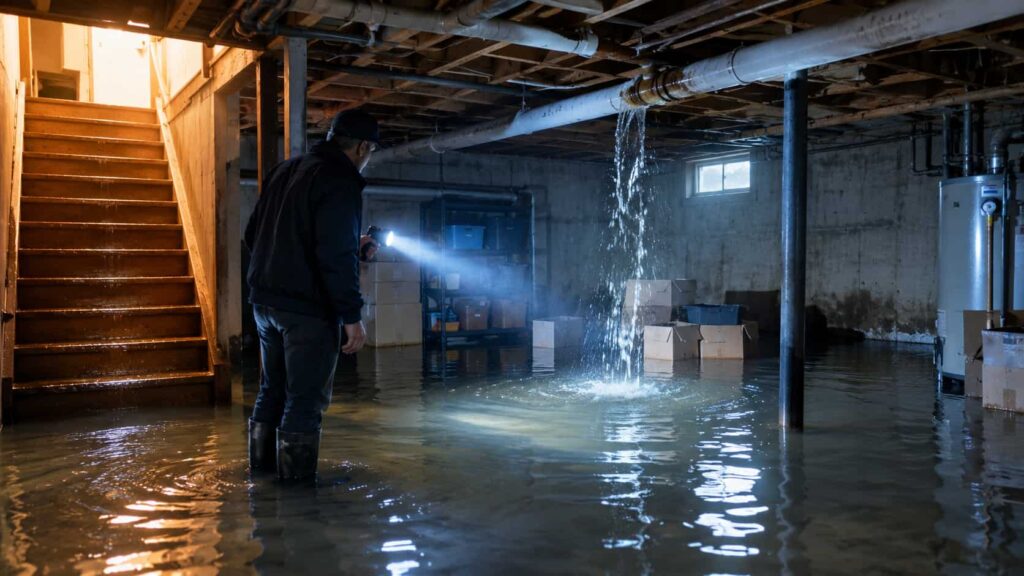
The water is already in your basement, and it isn’t slowing down. Before you grab a mop or start pulling things off the floor, find the main shutoff and close it. Everything else can wait ninety seconds.
A burst water main isn’t in the same category as a dripping faucet or a split washing machine hose. The volume is bigger, the pressure behind it is higher, and the water can reach places you wouldn’t think to check. Here’s how to handle it, in the order that actually matters.
What “water main” really means for a homeowner
People use the term loosely, so it helps to sort it out. The water main is the large pipe under the street that the utility maintains. The line that runs from that main to your house is the service line, and the pipe that carries water inside your walls is your home’s plumbing. In many places, the utility is responsible up to the meter and the homeowner is responsible after it, but the exact split depends on your water provider and your property. Check with them before you assume who pays for what.
When someone searches for a broken water main at their own address, they usually mean a failure on the service line or the main shutoff area. Either way, the cleanup problem inside the house looks the same.
The first ten minutes
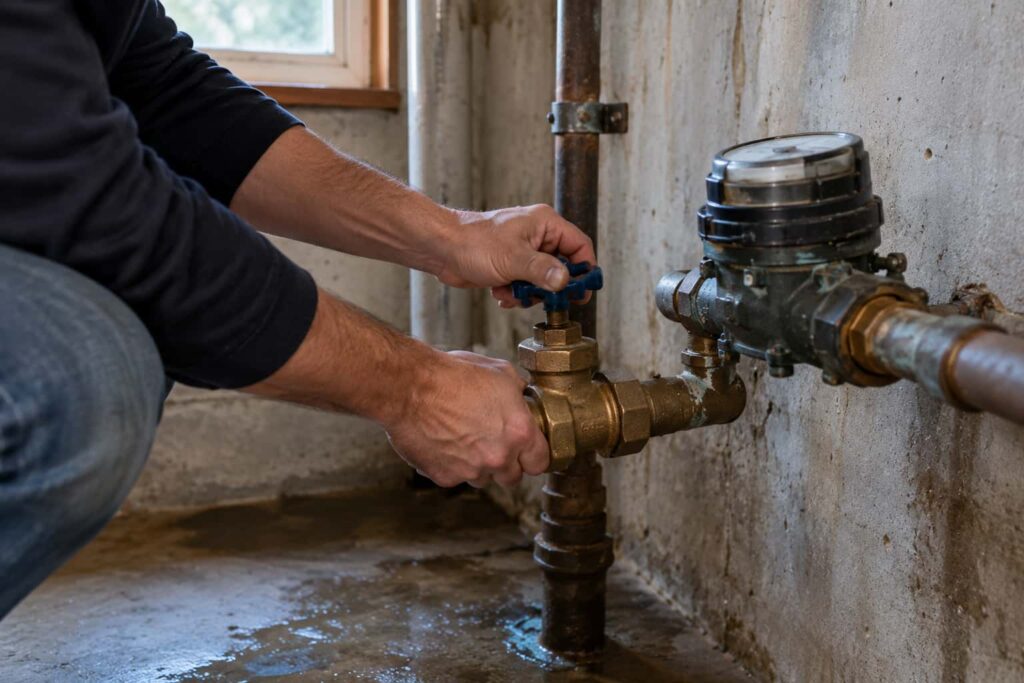
- Shut off the water at your main valve. It’s usually where the line enters the house, often in a basement, crawlspace, or utility room. Turn it clockwise. If it’s stuck or the break is outside before the valve, call your water provider right away.
- Stay out of standing water near electrical. If water is near outlets, appliances, or the panel, don’t wade in to reach the breaker. Wait for help.
- Don’t drink or cook with the tap water until you know it’s safe. A break can change pressure in the line, and your provider may issue guidance. Follow it.
- Take photos and video of the water, the source, and anything damaged before you move things.
- Call the right people. The utility for anything on their side, a plumber for repairs, and a restoration company for the water inside.
If anyone plans to dig up the yard to reach the line, call 811 first so buried utilities get marked. That one phone call prevents a second emergency.
Where the water goes
A main line break tends to send water downhill and downward. Basements take the worst of it, and a flooded basement can hold several inches of water in minutes. But finished walls, stairs, utility rooms, and anything stored on the floor get wet too, and water that’s seeped into drywall, insulation, and subfloors keeps working long after the puddle is gone.
If the break is in the yard, saturated soil near the foundation can push water through cracks and wall joints. You might see a clean-looking floor and still have a wet wall cavity.
Repair and cleanup are two different jobs
A plumber or utility crew fixes the pipe. Fixing it doesn’t dry your house. Professional main water line break repair deals with the failed line, while water extraction and drying deal with everything the water soaked. Treat them as separate checklists, and don’t let anyone tell you the second one is optional.
The same goes for smaller failures. If your problem is a split supply line or a pinhole leak rather than a full main break, the process is similar, and our guide to burst pipe water damage in Spokane covers those first steps in detail.
Signs of a slow underground leak
Not every main line problem is a dramatic burst. A slow leak can run for weeks. Watch for:
- A sudden jump in your water bill with no change in habits
- Low water pressure throughout the house
- A soggy patch or sinkhole-looking dip in the yard when it hasn’t rained
- The sound of running water when everything is off
- A water meter that keeps moving after you shut off every fixture
If any of this sounds familiar, professional pipe leak detection can locate the source before it becomes a flood. It’s also worth checking your meter yourself: turn off all water inside the house, then see whether the meter’s dial or low-flow indicator is still moving. If it is, water is going somewhere. The EPA’s Fix a Leak Week resources walk through simple ways to find household leaks.
Why drying is the step people skip
Once the water is out, the building materials still hold moisture. Carpet pad, drywall, baseboards, and framing can feel dry on the surface while staying damp inside. Proper structural drying uses airflow and dehumidification, and monitoring to confirm that materials have reached normal moisture levels. Surface dryness is not proof of anything.
If the flooding was widespread or you can’t tell how far the water traveled, a water damage inspection uses moisture meters and thermal imaging to find wet areas you can’t see. That record also helps when you’re documenting the loss for your insurance company.
The mold window
Wet materials left alone give mold a place to start, often within a couple of days. A musty smell, discoloration, or peeling paint near the affected area is a warning. If you want to know what to look for, our article on mold growth after water damage explains the signs and health concerns.
Before the next emergency
Locate your main shutoff today and make sure it actually turns. A valve that hasn’t moved in ten years can seize right when you need it. Show everyone in the house where it is. Keep photos of your home’s condition and major belongings, since a good “before” record makes any claim easier. And if you ever notice pressure changes or wet spots near the foundation, don’t wait for it to get worse.
A burst water main is stressful, but the damage depends on a short list of choices: shut off the water, keep yourself safe, document everything, and make sure the moisture left behind is fully dealt with, not just the standing water you can see.
Leave a Reply