
Water Damage Inspection: What It Involves and Why It Matters
Before any restoration work begins, a proper water damage inspection is what determines the actual scope of a problem. Skipping straight to cleanup without a real inspection often means missing hidden moisture that surfaces weeks later as mold, warped flooring, or a repeat leak.
Understanding what a thorough inspection actually involves helps homeowners know what to expect and what questions to ask before hiring anyone.
A standard inspection in Spokane typically takes 30 to 60 minutes on-site, and most companies — including us – offer it free when it’s tied to a restoration job. If you’re getting an inspection purely for peace of mind with no active damage, expect a smaller diagnostic fee, since that visit takes longer to document thoroughly without an obvious source to trace.
Understanding what a thorough inspection actually involves helps homeowners know what to expect and what questions to ask before hiring anyone.
What Happens During a Water Damage Inspection
A water damage inspection starts with identifying the source of the water, not just the visible damage. Whether it’s a burst pipe, a roof leak, or groundwater intrusion, tracing the actual origin point matters because water rarely stays where it first entered.
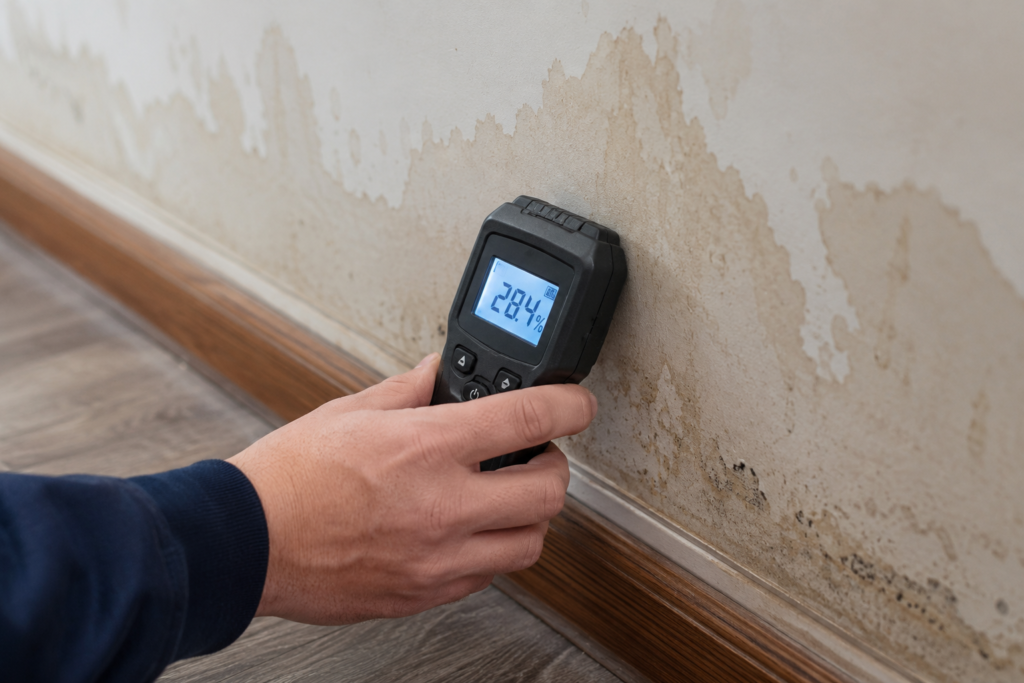
From there, technicians use moisture meters and thermal imaging cameras to map exactly how far moisture has traveled – often into wall cavities, under flooring, or behind baseboards where it isn’t visible at all.
This mapping step is the part that gets skipped most often when homeowners try to assess damage themselves. A wall might look dry on the surface while still holding significant moisture underneath, and that hidden moisture is exactly what leads to mold growth and structural problems down the line.
A flooded basement cleanup job, for example, almost always benefits from this kind of detailed mapping first, since basements trap moisture longer than any other part of a home.
Flood Damage Inspection vs. Standard Water Damage Inspection
A flood damage inspection typically covers more ground than a standard leak-related inspection, since floodwater often affects multiple rooms, different floor levels, and sometimes an entire foundation.
Floodwater is also more likely to carry contamination, depending on its source, which changes what an inspector is checking for. Beyond just moisture levels, a flood damage inspection needs to assess whether water was clean, gray, or contaminated black water, since that classification determines what sanitation steps come next.
Homes affected by storm runoff or sewer backup need this broader type of inspection before any cleanup begins, since treating contaminated water the same way as a clean supply-line leak creates health risks that aren’t always obvious right away.
Home Water Damage Inspection: What Homeowners Should Expect
A home water damage inspection isn’t just about confirming there’s a problem – it’s about documenting it clearly enough to guide the actual restoration work and, if needed, support an insurance claim.
A proper inspection report should include moisture readings from multiple points, photos of affected areas, and a clear explanation of how far damage has spread beyond what’s visible.
This documentation matters more than most homeowners realize until they’re dealing with an insurance adjuster. A water damage inspection that’s thorough from the start gives homeowners a paper trail showing exactly what happened and when, which tends to make claims move faster and with fewer disputes over scope.
Water Damage Assessment: Determining the Real Scope
A water damage assessment goes a step further than identifying wet spots – it determines which materials can be dried and saved versus which need to be removed and replaced.
Porous materials like carpet padding, drywall, and insulation typically can’t be fully dried once saturated, while non-porous surfaces like tile or concrete usually can be.
This assessment directly shapes the restoration plan, since guessing wrong in either direction either wastes money on unnecessary replacement or risks leaving contaminated material in place.
For homes dealing with recurring dampness or a slow leak with no obvious source, a water damage assessment near me search often reflects exactly this situation – something feels off, but the actual cause and extent aren’t clear yet. This is precisely the kind of situation where a professional assessment, rather than guesswork, saves both time and unnecessary repair costs later.
Why Timing Matters for Any Water Damage Inspection
The window for catching water damage before it becomes a bigger problem is smaller than most people expect. Materials that stay wet for more than 24 to 48 hours start breaking down structurally, and mold risk increases significantly after that point.
This is why anyone searching for water damage near me after noticing a leak or flooding should treat the timeline as urgent, not something to schedule for whenever convenient.
For pipe-related issues specifically, which are one of the most common triggers for an inspection call, a pipe leak detection and cleanup approach that starts with a proper inspection prevents the same failure point from being missed and causing a repeat problem.
Scheduling a Flood Damage Inspection
Homeowners who schedule a flood damage inspection proactively – particularly before winter freeze risk or ahead of spring snowmelt – often catch small issues, like a slow foundation crack or an aging pipe joint, before they turn into a full restoration job.
This is especially relevant for older homes, where a foundation waterproofing assessment can identify a developing weak point long before any visible water shows up inside.
What to Do After an Inspection Confirms Damage
Once an inspection identifies the scope of water damage, the next step is moving quickly into extraction and drying. A burst pipe damage cleanup response that flows directly from the inspection findings, rather than starting from scratch, keeps the timeline tighter and reduces the chances of secondary damage while everyone figures out next steps.
The inspection isn’t just a formality before the real work begins – it’s what determines whether that work actually solves the problem or just treats the surface of it.
What a Water Damage Inspection Actually Costs in Spokane
If an inspection leads directly into a restoration job, the inspection itself is typically free – the cost gets folded into the overall restoration estimate. A standalone inspection with no follow-up work, done purely to check for hidden moisture or confirm a suspicion, generally runs in the range that varies by scope: a single-room check costs less than a full-property assessment covering basement, crawlspace, and attic.
Homeowners often ask whether it’s worth paying for an inspection when nothing looks visibly wrong. In Spokane’s older housing stock – especially neighborhoods like Rockwood, Hillyard, and Manito/Cannon Hill – aging plumbing and settled foundations make a proactive check worthwhile every year or two, particularly before winter freeze risk and before spring snowmelt.
Nearby Spokane Areas We Serve Water Damage Inspection Services
Why Choose Us for Water Damage Inspection in Spokane, WA?
Licensed & Insured
Fully protected for your peace of mind
Free Estimates
No obligation quotes
5-Star Rated
Top reviews from customers
Same-Day Service
Quick response times
Need Water Damage Inspection Services?
Contact us today for a free estimate. Our experienced team is ready to help!