
Water Damage Restoration in Rockwood, Spokane WA
Rockwood is one of Spokane’s oldest neighborhoods, a tree-lined pocket of early-1900s homes around Rockwood Boulevard and St. John’s Cathedral. As part of the wider South Hill, it has the character people love and the aging plumbing, older foundations and drainage that come with it.
When water gets in, whether from a failed supply line, a sewer backup or groundwater pushing through an old basement wall, the first day decides how much of the house can be saved. Moisture travels into walls and subfloors faster than most people expect, and mold can start on wet materials within 24 to 48 hours.
Here is how water damage restoration works in Rockwood homes, what the first hours should look like, and what to check before the next freeze or spring snowmelt.
At a Glance: Water Damage in Rockwood
- Rockwood’s early-1900s homes often have aging supply lines, older sewer lines and foundations built before modern waterproofing, so hidden leaks and basement seepage are common.
- Mold can begin growing on wet materials within 24 to 48 hours, which is why water removal and drying should start as early as possible.
- Water mitigation (extraction, structural drying and moisture control) comes first, and repairs only start once readings confirm the structure is dry.
- Water damage is grouped into three categories, from clean supply-line water to sewage, and the category decides how the cleanup is done.
- Moisture readings, photos and a written scope help support an insurance claim.
- Call (509) 730-2838 for 24/7 emergency water damage response in Rockwood and nearby South Hill neighborhoods.
Why Rockwood Homes Face Unique Water Damage Challenges
The mature trees that make Rockwood Boulevard and the historic district so appealing also put older sewer lines at risk. Roots work their way into joints in aging clay or cast-iron pipe, and the first sign is usually a slow drain or a repeat backup at the basement floor drain. When that backup reaches the floor it is sewage, not clean water, and that is a different and more serious cleanup than a burst supply line.
Combine that with basements and crawlspaces built to older code standards, and Rockwood properties often need a slightly different approach than newer construction elsewhere in Spokane.
Foundation walls in many Rockwood homes were also built before modern waterproofing membranes were standard, which means groundwater intrusion during heavy rain or snowmelt is a recurring concern.
A foundation waterproofing assessment is often worth doing proactively in this neighborhood, rather than waiting for visible water to show up in a finished basement.
Water Mitigation in Rockwood: The First Critical Hours
Water mitigation in Rockwood is about stopping damage before it spreads, and it always comes before any repair work begins – this is the step that determines how much of the home can actually be saved.
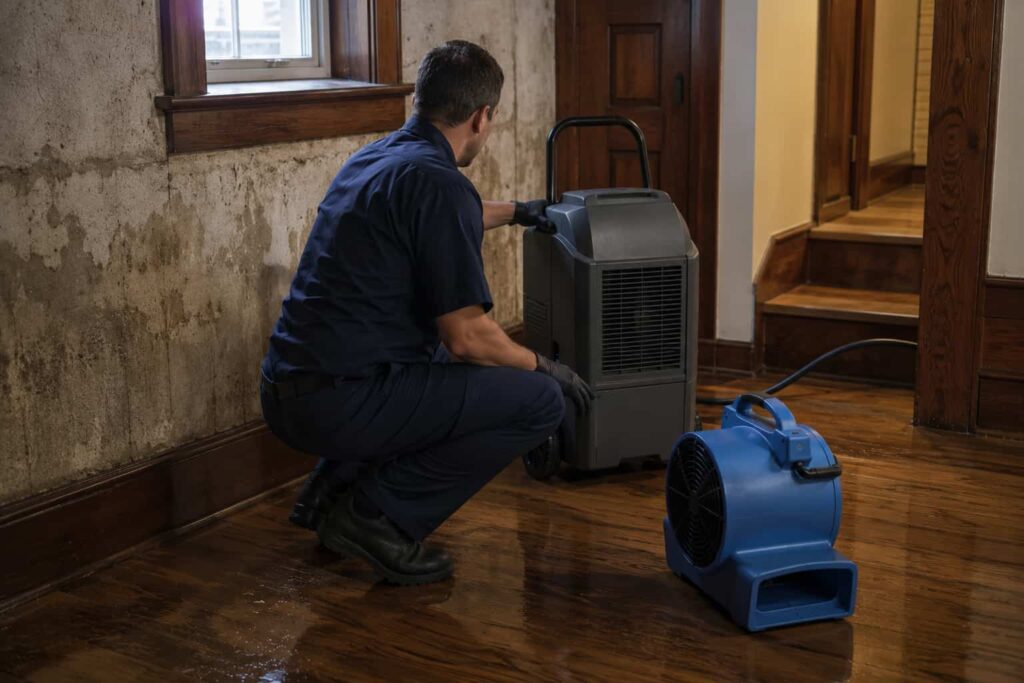
This means extracting standing water, positioning air movers and dehumidifiers to start pulling moisture out of walls and flooring, and identifying how far the water actually traveled – which is often much further than what’s visible on the surface.
In older homes especially, water can move through wall cavities and under original hardwood subfloors in ways that aren’t obvious until moisture readings are taken.
The timeline matters here. Materials that stay wet for more than a day or two start breaking down structurally, and mold can begin growing within 24 to 48 hours.
This is why water cleanup in Rockwood needs to start as close to the moment of discovery as possible, not after a few days of “waiting to see how bad it is.”
Starting water mitigation in Rockwood early is what separates a contained problem from a full restoration job. Every hour of delay lets moisture travel further into wall cavities, subfloors and framing that are already older and more vulnerable in this part of Spokane.
Water Damage Repair: What Comes After Mitigation
Once the water is out and the space is drying, water damage repair in Rockwood shifts to rebuilding what was actually damaged, from drywall to flooring to trim work.
This might mean replacing sections of drywall, restoring hardwood flooring that took on moisture, or repairing baseboards and trim that absorbed water at the floor line.
Homes with finished basements often need the most extensive work here, since carpet, framing, and drywall are all more vulnerable than an unfinished space with a bare concrete slab.
For homes dealing specifically with basement flooding, a flooded basement cleanup approach that includes full moisture verification – not just surface drying – makes a real difference in preventing mold from developing weeks after the visible cleanup is done.
Choosing Among Water Restoration Companies in Rockwood
When comparing water restoration companies in Rockwood, the biggest differentiator isn’t equipment, since most crews run similar drying tools. It’s how thoroughly they document the process: moisture readings at the start, during drying and at sign-off, plus photos and a written scope that follows IICRC S500 guidelines.
A company that takes moisture readings throughout the job, not just at the start and end, gives homeowners a clear record of when the space actually reached a safe moisture level.
This documentation also matters significantly if an insurance claim is involved, since adjusters want to see verified drying progress, not just a description of work completed.
Local familiarity matters too. A team that understands Rockwood’s older plumbing systems and foundation types will often catch secondary issues – like a compromised sewer line or a weak point in an old foundation wall – that a generic, non-local crew might miss entirely.
Water Removal and Water Extraction in Rockwood Homes
Water removal in Rockwood starts with emergency water extraction. Pumps and extractors pull out the standing water first, because the longer it sits the deeper it soaks into subfloors, baseboards and insulation. Drying and repair only begin once the bulk water is gone.
Industrial-grade extraction equipment removes bulk water quickly, but the real work happens after – confirming that moisture hasn’t traveled into places a wet-vac can’t reach, like under original hardwood flooring or inside older wall cavities packed with outdated insulation.
For pipe-related water damage specifically, which is common given the age of plumbing in this neighborhood, a pipe leak detection and cleanup approach that addresses both the leak source and the resulting water damage prevents the same problem from resurfacing months later.
Our Water Damage Restoration Process in Rockwood
Every Rockwood job follows the same order, so you know what is happening at each stage:
- Emergency call and assessment: We find the source of the water, check for electrical and slip hazards, and identify the water category before anything is moved.
- Water removal: Extractors and pumps remove standing water from floors, carpet and finished basement spaces.
- Structural drying and dehumidification: Air movers and dehumidifiers dry framing, drywall and subfloors, and moisture meters confirm the readings, which is the core of structural drying in older homes with original hardwood and plaster.
- Cleaning, sanitizing and deodorizing: Affected surfaces and contents are cleaned, and odors from damp materials are removed.
- Mold check: Areas that stayed wet are inspected so hidden growth is caught before the walls are closed up.
- Repairs and documentation: Damaged drywall, flooring and trim are rebuilt, and the moisture logs and photos are handed over for your insurance claim.
Types of Water Damage We Clean Up in Rockwood
- Clean water (Category 1): Supply-line failures, broken fill valves and roof leaks. It is the lowest-risk water, but finished basements still need fast drying to avoid mold.
- Gray water (Category 2): Dishwasher, washing machine or sink overflow. It carries contaminants and needs sanitizing along with extraction.
- Black water (Category 3): Sewer backups through a floor drain, often from root-blocked older lines. This needs protective equipment and strict containment.
- Burst pipes in winter: Freeze-thaw cycles split lines in exterior walls, crawlspaces and attics, and water spreads quickly through older framing.
- Snowmelt and groundwater: Spring melt can push water through old foundation walls, and flood damage cleanup is needed once it reaches a finished basement.
Preventing Repeat Water Damage in Rockwood
Because Rockwood’s housing stock skews older, prevention matters more here than in newer developments. Homes built before modern plumbing codes often have galvanized pipes that corrode from the inside, which is why Rockwood sees more hidden leaks than newer neighborhoods on Spokane’s south side.
A seasonal check – especially before winter freeze and after spring snowmelt – catches small issues before they turn into a full water cleanup job in Rockwood.
A water damage inspection every year or two- particularly before winter, when freezing pipes become a real risk, and again before spring snowmelt – can catch small issues like a slow leak or early foundation seepage before they become a full restoration job.
This is especially worth doing for homes with a documented history of past water damage, since previously affected areas are statistically more likely to have a repeat issue.
Getting Help Quickly Matters Most
Whatever the source – a failing sewer line, an aging pipe, or groundwater finding its way through an older foundation – the outcome in Rockwood almost always comes down to response time.
A burst pipe damage cleanup response that starts within the first hour keeps water contained to a smaller area, which means less demolition, less drying time, and a faster path back to a normal home.
Rockwood homeowners dealing with water damage right now are better served by acting immediately than by waiting to see how the situation develops.
Water Damage in Rockwood: Common Questions
What is water mitigation, and why does it come before repairs?
Water mitigation is the work that stops the damage from growing: removing standing water, drying the structure and controlling moisture. Repairs only make sense once the materials are verified dry.
How soon do I need to call someone after discovering water damage?
As soon as you can safely do so, ideally the same day. Wet drywall and subfloors weaken quickly, and mold can begin on damp materials within 24 to 48 hours.
Is a burst pipe or sewer backup usually covered by insurance?
Many policies cover sudden and accidental damage such as a burst pipe, while flood and sewer backup coverage is often a separate add-on. Check your policy, and keep moisture readings and photos from the start of the job.
Can tree roots in the sewer line cause water damage in my basement?
Yes. Roots in older sewer lines cause slow drains and backups, and a backup through the basement floor drain is a sewage cleanup, not a simple wet-vac job.
How long does structural drying take?
It depends on how far the water spread and what the materials are, but drying often takes several days. It is finished when moisture readings return to normal, not when surfaces feel dry.
Our Services in Rockwood, 99207
Find Us in Rockwood
Need Water Damage Restoration Services in Rockwood?
Contact us today for a free estimate. Our experienced local team is ready to help!