
Water Damage Restoration for North Indian Trail Homes
Most homes in North Indian Trail sit on sloped lots near Indian Trail Road, with basements and crawlspaces that take the first hit when water shows up. Meltwater running downhill, a sump pump that quits in a storm, or a pipe that froze on a cold night can each put water in a home within minutes. Where the water ends up depends a lot on how the lot is graded.
We handle the full job: pulling out the water, drying the structure, cleaning, and rebuilding what has to be replaced. This page covers what that looks like in this part of north Spokane and what to do in the first hour.
Water Mitigation: What Happens First
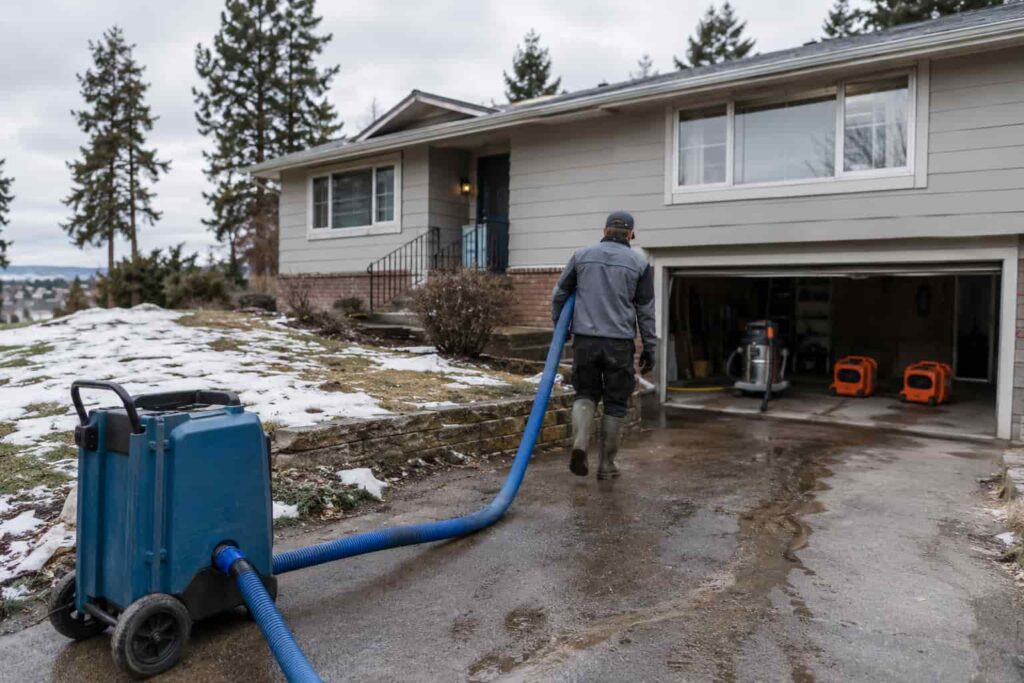
Water mitigation is the work that stops the damage from growing, and it matters more than the repair that comes later. It means getting standing water out, finding where moisture has traveled, and running dehumidifiers and air movers until the framing and subfloor read dry.
The first day is the one that counts. Drywall and insulation start to break down, and the EPA says mold can begin growing on damp materials within 24 to 48 hours. Our crew starts with extraction, then moves to structural drying once the bulk water is gone. Drying often takes three to five days, and we check moisture readings before anything gets closed up.
Why Water Damage Looks Different on the Indian Trail Slopes
Hillside lots change how water behaves. Runoff from heavy rain or spring snowmelt moves downhill and collects against the uphill foundation wall, where it can find its way through cracks, window wells or the seam where the floor meets the wall. A lot of homes in the area date from the 1970s through the 1990s, so original plumbing, older sump systems and aging gutters are common.
Winter adds its own problems. Exterior-wall pipes and crawlspace lines can freeze and split, and the water often doesn’t show up until things warm up and the pipe starts leaking.
- Basement seepage: water comes in at the uphill wall or along the slab edge after rain or melt.
- Sump pump failure: a power outage during a storm is when the pump is needed most and is least likely to run.
- Frozen or split pipes: often in crawlspaces, garages and outside walls.
- Roof and attic leaks: ice dams push meltwater under shingles and into the ceiling below.
- Sewer backups: slow drains and floor-drain backups that show up after heavy rain.
Flood Cleanup in North Indian Trail
When the water is more than a spill, it becomes a flood job. Storm runoff that comes into a home from outside is treated as contaminated, so porous materials like carpet, pad and wet drywall usually have to be removed instead of dried. Our flood damage cleanup work follows that order: remove the water, remove what can’t be saved, dry and sanitize what stays, then rebuild.
If you’re comparing a flood restoration company in Indian Trail, ask how they measure dryness. A company should be able to show you readings, not just tell you the room feels dry. Storm damage cleanup after a heavy rain or wind event follows the same process, with tarping or board-up added when the building envelope is open.
Standard homeowners policies generally don’t cover flood, so it’s worth checking your policy and asking your agent about flood coverage before you need it.
What to Do Before We Arrive
- Don’t walk through standing water if outlets, cords or appliances are in it. Shut off power at the panel only if you can reach it without stepping in water.
- If a pipe is the source, close the main water valve.
- Take photos of the water level, the damage and the source before anything is moved.
- Lift small valuables and electronics off the floor.
- Keep kids and pets out of any water that could be sewage or storm runoff.
Basements, Crawlspaces and Sump Pump Failures
The lowest level gets the worst of it, because water follows gravity. A flooded basement usually involves carpet, drywall, insulation and mechanical equipment at the same time, so we map moisture before deciding what comes out. For a deeper look at how that process works, see our flooded basement cleanup page.
Crawlspaces are easy to forget until the smell shows up. Standing water under the house keeps insulation and subfloor wet for weeks if nobody looks, which is why we check there on every job that involves a basement or ground-level leak.
Water Damage in North Indian Trail: Common Questions
How fast should I call after finding water in my North Indian Trail home?
Right away if you can. Wet drywall and subfloors weaken within a day, and mold can start growing on damp materials in 24 to 48 hours. Even if the leak looks small, water can travel behind baseboards and under flooring where you can’t see it.
Will my homeowners insurance cover water damage from a burst pipe or a flood?
A burst pipe is often covered because it’s sudden and accidental. Flood from outside, meaning surface water or rising groundwater, is usually excluded and needs a separate flood policy. Check your policy, and keep photos and moisture readings. Adjusters ask for both.
Does snowmelt really cause basement water damage on sloped lots?
Yes. On a hillside, melt and rain run downhill and pool against the uphill foundation wall, especially when the ground is still frozen and can’t absorb it. Clear gutters, extend downspouts and test your sump pump before spring.
What if the water came from a sewer backup?
Treat it as contaminated. Stay out, don’t use a household vacuum, and keep kids and pets away. Sewage-contaminated materials like carpet and drywall usually have to be removed, and the area has to be cleaned and disinfected with protective gear and containment.
How long does drying take after a pipe break or flood?
Water removal takes hours. Structural drying usually takes three to five days, depending on how far the water spread and what it soaked into. The job isn’t done until moisture readings return to normal, not just when surfaces feel dry.
Can I handle it myself if it’s only a small amount of water?
If it’s a small amount of clean water that you caught within an hour or two, fans and a dehumidifier may be enough. If it sat longer, reached a wall, or came from outside, don’t. Hidden moisture inside walls is what turns into mold weeks later.
Get a Free Quote in North Indian Trail Today
Don’t let water damage ruin your day. Call Spokane Water Damage at (509) 730-2838 for immediate service in North Indian Trail.
Our Services in North Indian Trail, 99208
Find Us in North Indian Trail
Need Water Damage Restoration Services in North Indian Trail?
Contact us today for a free estimate. Our experienced local team is ready to help!