
Water Damage Restoration in South Hill, Spokane, WA
South Hill is one of Spokane’s largest and most varied neighborhoods, stretching across a mix of older established streets and newer construction on higher ground. That range in home age and elevation means water damage shows up differently here than in other parts of the city, and knowing what’s common in South Hill specifically makes it easier to catch problems early.
Why South Hill Sees Its Own Pattern of Water Damage
The elevation change across South Hill plays a bigger role than most homeowners realize. Properties higher up the hill deal with more wind-driven rain and ice dam risk in winter, while homes lower on the slope, closer to the flatter parts of the neighborhood, tend to see more groundwater and drainage-related issues during spring runoff. South hill water damage repair calls often trace back to one of these two patterns – either water working its way in from above through roofing and gutters, or water pushing in from below through foundations and window wells.
Homes with mature landscaping, which is common throughout South Hill’s older sections, also face a higher risk of root intrusion into aging sewer and water lines. This is one of the quieter causes behind south hill water leaks, since a slow root-related leak can run for weeks before it’s noticeable above ground.
South Hill Water Leak Repair: Catching Problems Early
South hill water leak repair works best when it starts with finding the actual source, not just addressing the visible wet spot. A leak inside a wall or under a slab foundation can travel a surprising distance before it surfaces, which means the water stain on a ceiling or the damp patch on a basement floor isn’t always directly above or below the actual leak. This is especially true in South Hill’s older homes, where plumbing runs weren’t always mapped the way modern construction documents them.
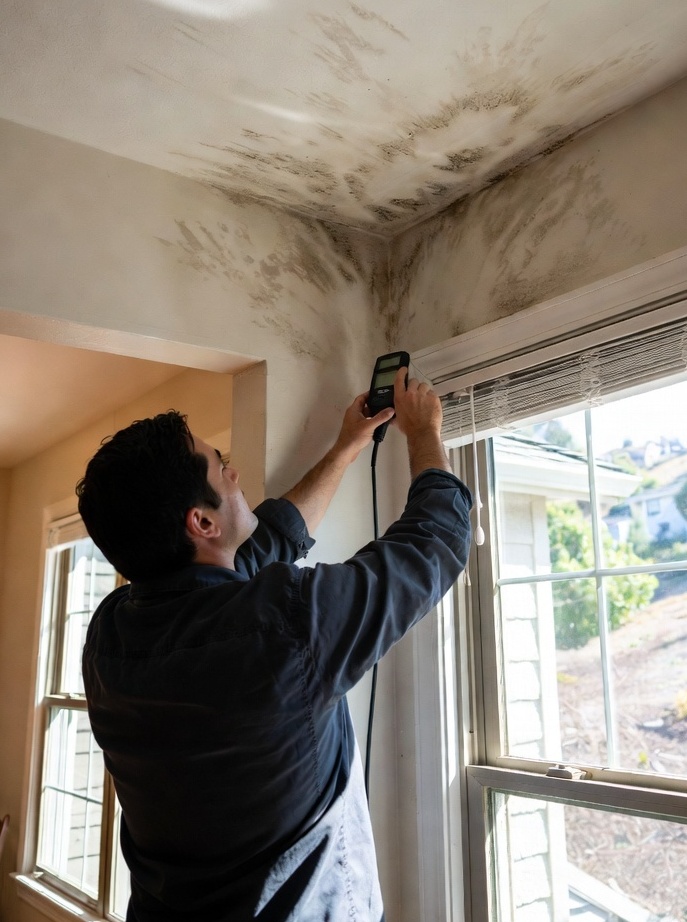
A proper water damage inspection uses moisture meters and thermal imaging to trace exactly how far water has traveled, which matters both for accurate repair work and for keeping restoration costs from ballooning due to missed pockets of hidden moisture.
South Hill Water Leak Detection: Why It’s Different From Repair
South hill water leak detection is a separate step from repair, and it’s often the part homeowners skip. Detection means confirming exactly where a leak is coming from – a failed pipe joint, a cracked slab, a compromised roof flashing – before any repair work begins. Skipping this step and jumping straight to patching visible damage is one of the most common reasons the same leak resurfaces months later.
For homes with recurring dampness or a slow-rising water bill without an obvious cause, professional leak detection is worth doing before assuming the worst. Sometimes what looks like major water damage turns out to be a single fixable leak point, and detection is what makes that distinction clear.
Leak Repair in South Hill: What the Process Actually Involves
Leak repair south hill projects typically follow a consistent sequence once the source is confirmed. The water supply to the affected line is shut off or rerouted, any standing water is extracted, and the area is opened up enough to access the actual failure point – whether that’s a section of pipe, a foundation crack, or a roof penetration. From there, drying begins immediately, since leaving materials wet even during the repair itself adds unnecessary risk of mold developing in wall cavities or under flooring.
For pipe-specific failures, which are common across South Hill given the mix of home ages, a burst pipe damage cleanup approach that handles both the water extraction and the structural drying in one process tends to produce a cleaner result than treating them as separate jobs.
Basements and Below-Grade Spaces in South Hill
Given the elevation variation across the neighborhood, basements in the lower sections of South Hill face real groundwater pressure during Spokane’s wetter months. A flooded basement cleanup response that includes moisture verification – not just running fans until the floor feels dry — matters here more than in flatter neighborhoods, since below-grade concrete can hold moisture well after the surface appears dry.
Homes that have dealt with basement water before are also worth a proactive look. A foundation waterproofing assessment can catch a developing crack or a failing seal before it turns into a repeat flooding event, which is especially relevant for older South Hill properties built before modern waterproofing membranes were standard practice.
What South Hill Homeowners Should Watch For
A few signs are worth paying attention to before they become a bigger repair. Unexplained increases in a water bill often point to a hidden leak somewhere in the system. Musty smells in a specific room, even without visible water, can indicate moisture trapped behind drywall. Soft or spongy flooring near exterior walls sometimes signals slow water intrusion from outside. And any staining on ceilings below a bathroom or kitchen deserves a look, since plumbing runs through those areas are common failure points.
Getting Help Quickly in South Hill
Whether the issue is a slow leak that’s been building for weeks or a sudden pipe failure, response time still matters most. A water damage inspection early in the process gives South Hill homeowners a clear picture of what’s actually happening, and a fast, well-documented repair keeps a manageable problem from turning into a much larger one. Given how varied South Hill’s terrain and housing stock are, working with a team that understands both the elevation-driven and age-driven patterns specific to this neighborhood makes a real difference in the outcome.
Our Services in South Hill, 99203
Find Us in South Hill
Need Water Damage Restoration Services in South Hill?
Contact us today for a free estimate. Our experienced local team is ready to help!